It is generally believed that young people have more energy and vitality. Entrusting them with organizing activities can attract more young people, make the activities more dynamic, and create a livelier atmosphere. Such a view is intended to make good use of the “charisms” of young people and help them develop their strengths. However, in my opinion, it is precisely this view that underestimates our young people.
Saint Paul the Apostle instructed Timothy that, in order not to be looked down upon or dismissed simply because he was young as “that’s just what youngsters are like,” and in order that others might find God through him, he should cultivate an image worthy of respect and imitation. This image was not to be based on “sublimity of speech or wisdom” (1 Cor 2:1), nor on displaying the supposed “characteristics” of youth to the fullest—singing, dancing, showing off talents, and endless entertainment—but on every kind of virtue: charity, faith, purity, sincerity, frankness, patience, courage, justice, piety, and joy.
In other words: cultivate virtue and strive for holiness! This is how a person should conduct himself and establish himself in the world while young.
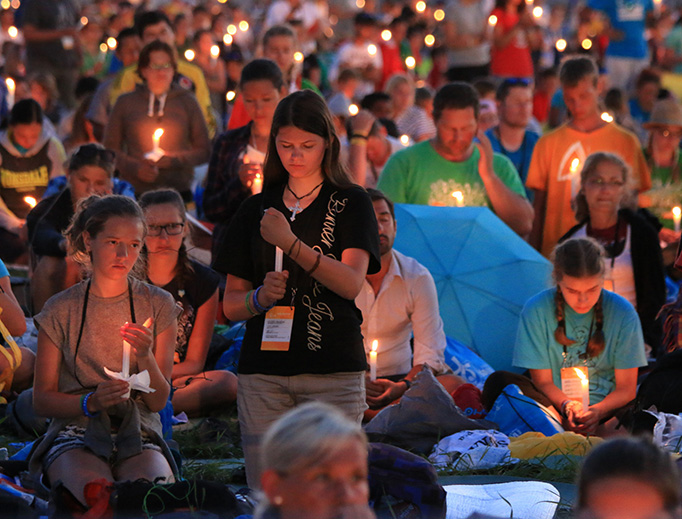
During the World Youth Day in 2005. At that time, Cardinal Joseph Zen of Hong Kong told the young people:
“While you are young, you should offer everything to God! Like an orange—who would wait until it is dry and old before eating it?”
With the youthful drive to move forward courageously, striving to cultivate virtue and attain holiness, is this not more direct and effective, and closer to God, than a secularized approach to living out our faith?
You may object: “There is no conflict between cultivating virtue and holiness and singing, dancing, and playing games, is there?”
But Saint Paul the Apostle says: “Strive eagerly for the greater gifts. And I will show you a still more excellent way.” “Love is patient, love is kind. It is not jealous, it is not boastful, it is not arrogant, it is not rude, it does not seek its own interests, it is not quick-tempered, it does not brood over wrongdoing, it does not rejoice over wrongdoing but rejoices with the truth. It bears all things, believes all things, hopes all things, endures all things.” (1 Cor 12:31; 13:4–7)
In other words, I will say the same thing again: cultivate virtue and strive for holiness! “Those who rejoice should live as though they did not rejoice … and those who make use of the world as though they did not use it.” (1 Cor 7:30b, 31a) Why, then, do we continue to concern ourselves with “how to add religious meaning to entertainment,” rather than striving to live out God’s love in our daily lives?
What God asks of us is total love, unconditional love, self-sacrificing love—in other words, the love of the Cross—because He loved us first with this very love.
How, then, can we cultivate such love?
Dear young people, let us first quiet our restless hearts. The voices of the world are too noisy, making it difficult for us to hear the call of God’s love. In fact, God is constantly speaking to us and showing us the way forward. Do you not want to know how God wishes you to live? Do you not want to discover your vocation?
Then first, be still. Put down your headphones. Stop those pointless mobile games and endless short videos, because God is waiting for us in sacred silence.
What is silence?
Silence is not simply a state of quietness devoid of content, nor merely time spent alone with oneself. Nor is it, as some people claim, an opportunity to discover spiritual strength within oneself through quietness. Still less is it the experience of enjoying a supposed unity with nature, or with “heaven, earth, and humanity.” All of these are merely variations on the theme of self-centeredness.
So what, then, is silence really?
Silence is prayer. It is a time when we focus our minds and spirits on being with God. It is a time when we allow God to possess us.
In silence, we open our hearts, and God enlarges our narrow hearts, making us more generous toward both Him and other people. In silence, we see clearly all the things that hinder God and receive the strength to fight persistently against our own weaknesses. In silence, we discover that God has already kindled the fire of love within our hearts. Our desire to serve God will continue to deepen until we are consumed by that love.
“Your salvation is in conversion and quietness; your strength is in calm and trust.” (Isaiah 30:15)
Be silent in prayer!
On the Cross, through a love that shakes our very souls, God silently calls us to offer ourselves to Him with ever greater generosity. Whether in celibacy or marriage, in the priesthood or religious life, in the world or in solitude, we are all called to move toward greater perfection, toward holiness.
If we first allow ourselves to be immersed in God’s love, then we will be able to conquer this world, filled with sin, through love, so that all things in this world may be “restored in Christ.”
Discover more from Chavez Cyrillus Mariae Poon
Subscribe to get the latest posts sent to your email.