Among the Seven Holy Sacraments of the Catholic Church, the Holy Eucharist—the source and summit of the Christian life and the ordinary means by which the faithful are sanctified — is the greatest and most sublime of all the sacraments. While Baptism incorporates us into the Mystical Body of Christ and the other sacraments communicate particular graces according to our spiritual needs, the Holy Eucharist differs from every other sacrament because it contains not merely the grace of Christ but Christ Himself — Body, Blood, Soul, and Divinity. It is, therefore, the sacrament in which the faithful encounter the living God most intimately this side of Heaven.
Catholics who are in full communion with the Church and properly disposed according to her teachings may receive Holy Communion at Mass and partake of the true Bread from Heaven, the Incarnate Word, thereby receiving spiritual nourishment, sanctifying grace, and a foretaste of the eternal banquet promised in the Kingdom of God. Through this sacred banquet, Christ unites Himself to the communicant in a profound and mysterious way, strengthening charity, forgiving venial sins, preserving the soul from future mortal sin, and deepening communion with His Church.
Although Christians who are not in full communion with the Catholic Church ordinarily may not receive Holy Communion because Eucharistic communion also signifies full ecclesial unity, they may nevertheless encounter Christ through prayer before the Blessed Sacrament, provided they believe in His Real Presence. Countless souls have discovered the love and mercy of God while kneeling silently before the tabernacle or during Eucharistic exposition, allowing Christ Himself to draw them closer to His Sacred Heart.
The roots of the Holy Eucharist extend throughout salvation history. In the Old Testament, God continually prepared His people for this supreme gift through various signs and figures. The Passover lamb, whose blood spared the Israelites from death and whose flesh was eaten before their deliverance from Egypt, prefigured Christ, the true Paschal Lamb, whose sacrifice delivers humanity from the slavery of sin. Likewise, the manna that sustained Israel during forty years in the wilderness foreshadowed the true Bread from Heaven that would give eternal life to the world. Even the mysterious offering of bread and wine presented by Melchizedek, priest and king of Salem, was understood by the Fathers of the Church as a prophetic image of the Eucharistic sacrifice.
The fulfilment of these ancient promises came in the person of Jesus Christ. Before His Passion, our Divine Saviour prepared His disciples for this mystery through the Bread of Life discourse recorded in the sixth chapter of St. John’s Gospel. There He declared: “I am the living bread that came down from heaven…unless you eat the flesh of the Son of Man and drink His blood, you have no life in you” (Jn 6:51–53). Many who heard these words found them difficult and abandoned Him, yet Christ did not soften or reinterpret His teaching. Instead, He reaffirmed it, thereby revealing that the Eucharist would truly be His Flesh and Blood rather than merely a symbolic memorial.
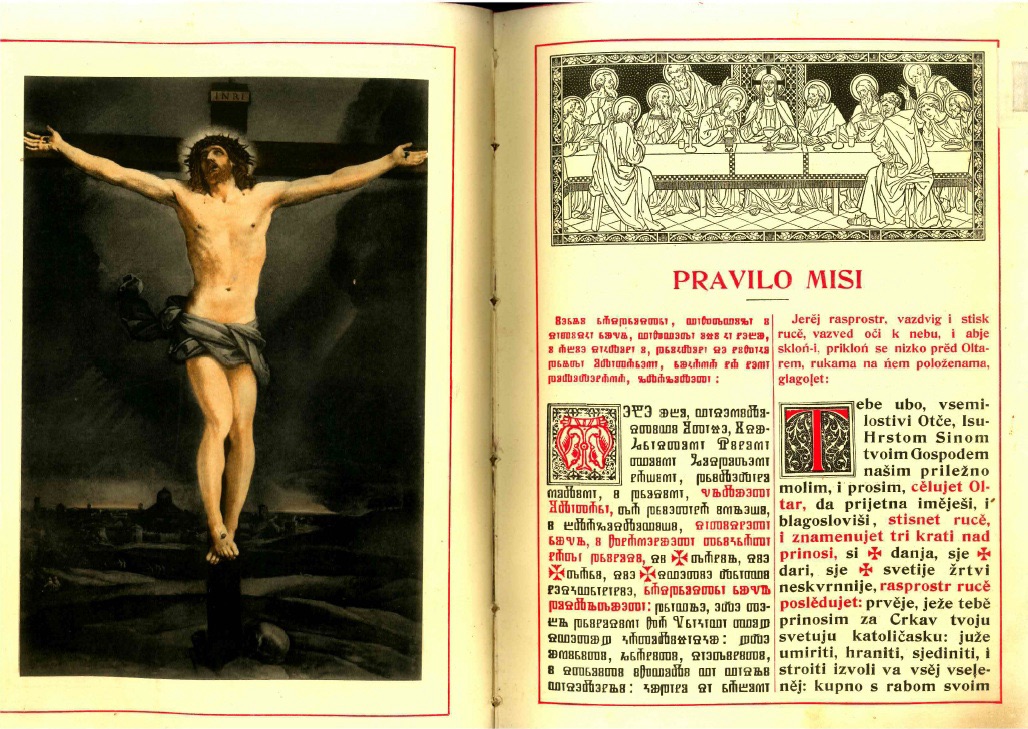
At the Last Supper, on the night before He suffered, Jesus fulfilled this promise. Taking bread into His sacred hands, He blessed it, broke it, and gave it to His Apostles, saying, “This is My Body.” Then, taking the chalice filled with wine, He declared, “This is My Blood of the new covenant, which is poured out for many for the forgiveness of sins.” In this sacred moment, Christ instituted both the Holy Eucharist and the ministerial priesthood, entrusting to the Apostles the sacred responsibility of perpetuating this mystery until the end of time. By commanding them, “Do this in remembrance of Me,” He established the perpetual sacrifice of the New Covenant, through which the saving fruits of Calvary would be made present to every generation.
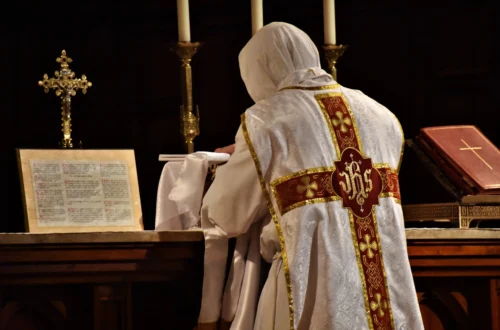
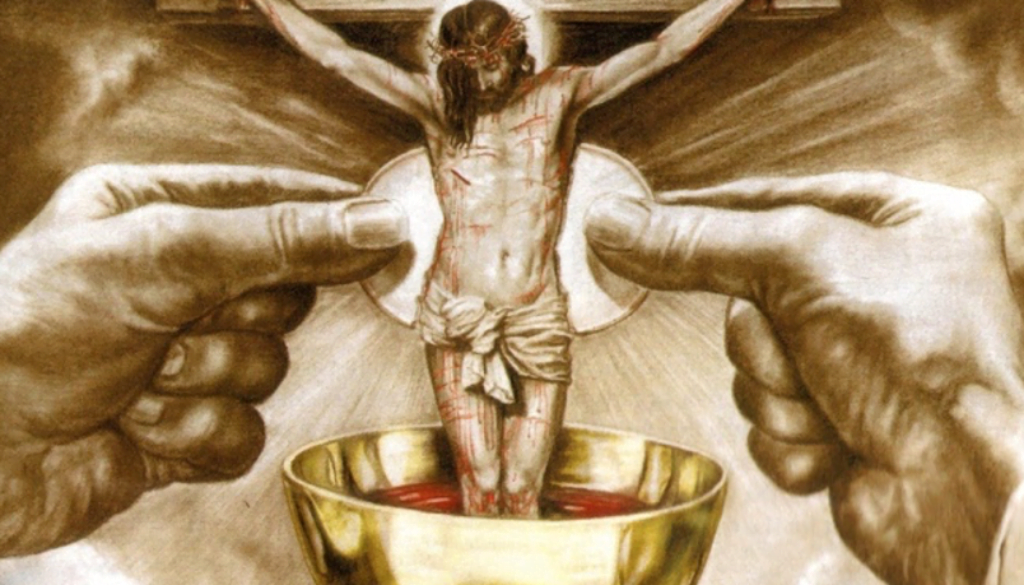
The Holy Sacrifice of the Mass is therefore not another sacrifice separate from Calvary but the same sacrifice made sacramentally present. Christ is not sacrificed repeatedly; rather, the one perfect sacrifice offered once upon the Cross is represented in an unbloody manner upon the altar. At every Mass, the Church is mystically united to the sacrifice of Christ, participating in the eternal act of worship that the Son continually offers to the Father. Time and eternity meet upon the altar, where Heaven touches earth, and the faithful are invited to unite their prayers, sufferings, labours, and joys with Christ’s perfect offering.
Following Pentecost, the Apostles faithfully obeyed Christ’s command by celebrating “the breaking of the bread” together with the prayers of the Church. The Acts of the Apostles records that the earliest Christians “devoted themselves to the apostles’ teaching and fellowship, to the breaking of bread and the prayers” (Acts 2:42). Their Eucharistic celebrations formed the centre of Christian life, nourishing believers spiritually while strengthening the unity of the growing Church.
During these earliest years, the celebration of the Eucharist was often associated with the Agape, or love feast, a communal meal expressing the charity shared among believers. As Christianity expanded, however, the Church gradually distinguished the Eucharistic celebration from the ordinary meal in order to preserve its sacred character. Around AD 150, St. Justin Martyr described the Christian liturgy in remarkable detail in his First Apology. His testimony reveals that the essential structure of the Mass — readings from Scripture, preaching, common prayers, the offering of bread and wine, the Eucharistic Prayer, Holy Communion, and the collection for the poor — had already become firmly established and closely resembles the structure of the Mass celebrated throughout the Catholic Church today.
Throughout the second and third centuries, the Church continued to enrich her liturgical worship. Additional prayers, hymns, scriptural readings, and ceremonial actions gradually developed under the guidance of the Holy Spirit. By the fourth century, following the end of Roman persecution, Christians were able to construct magnificent churches dedicated to divine worship. Altars, sacred vessels, liturgical vestments, incense, candles, processions, and sacred chant were introduced or developed more fully, not to obscure the simplicity of Christian worship but to express visibly the infinite dignity of the Eucharistic mystery. Every aspect of Catholic liturgy — from architecture to music, from vestments to sacred art — came to reflect the Church’s unwavering conviction that Christ Himself is truly present upon the altar.
As theological controversies arose during the Middle Ages, the Church articulated her Eucharistic doctrine with increasing precision. To defend the apostolic faith against those who denied Christ’s substantial presence, theologians employed the term “transubstantiation.” This doctrine teaches that, through the words of consecration spoken by a validly ordained priest acting in the person of Christ, the entire substance of the bread and wine is changed into the true Body and Blood of Jesus Christ, while the outward appearances — known philosophically as the accidents — remain unchanged. Consequently, after the consecration there no longer remains bread and wine in their substance, but Christ Himself, whole and entire, is truly, really, and substantially present under each Eucharistic species.
The Fourth Lateran Council in 1215 formally employed the term “transubstantiation,” and the Council of Trent later reaffirmed the doctrine in response to the Protestant Reformation. These solemn definitions did not invent a new belief but simply expressed more clearly what Christians had believed from the beginning. This reaffirmation inspired an extraordinary flowering of Eucharistic devotion throughout the Catholic world, including Corpus Christi processions, Benediction of the Blessed Sacrament, perpetual adoration, and the composition of magnificent hymns by St. Thomas Aquinas, whose Eucharistic writings continue to nourish the spiritual life of the Church.
The institution of the Holy Eucharist reveals with incomparable clarity both the infinite mercy and the perfect justice of God. The depth of God’s love is manifested most profoundly in the sacrifice of Christ upon Calvary. Foreseeing His Passion, Jesus experienced such anguish in the Garden of Gethsemane that “His sweat became like great drops of blood falling to the ground” (Lk 22:44). Nevertheless, freely embracing the Father’s will, He accepted every humiliation, every wound, and ultimately death itself so that humanity might be reconciled to God. Even before His suffering began, He gave His own Body and Blood to His Apostles under the appearances of bread and wine, anticipating sacramentally the sacrifice He would complete upon the Cross only hours later.
In the Holy Eucharist, the humility of God reaches an astonishing depth. The eternal Son through whom all things were created becomes hidden beneath the simple appearances of bread and wine. The King of Heaven allows Himself to dwell silently within humble tabernacles scattered throughout the world. He who commands the choirs of angels waits patiently for sinners to return to Him, offering Himself continually as spiritual food for every soul willing to receive Him with faith and love. Such humility reveals the immeasurable charity of the Sacred Heart of Jesus.
At the same time, the Eucharist reminds us that God’s mercy never abolishes His justice. The Blessed Sacrament is the ordinary channel through which Christ pours His sanctifying grace into the souls of the faithful, yet these graces bear fruit only when received with proper disposition. Our Lord calls His disciples not merely to receive Him physically but to be transformed interiorly through repentance, faith, and obedience.
For this reason, the Church has always insisted upon careful preparation before Holy Communion. The faithful are encouraged to examine their consciences sincerely, observing the Eucharistic fast, cultivating recollection through prayer, and approaching the altar with profound reverence. Anyone conscious of having committed mortal sin should first receive absolution through the Sacrament of Reconciliation before receiving Holy Communion. Frequent confession, even of venial sins, disposes the soul to receive the Eucharist more fruitfully by increasing humility, purifying the heart, and strengthening the resolve to pursue holiness.
The Apostle St. Paul speaks with solemn seriousness regarding the worthy reception of the Blessed Sacrament: “Whoever eats the bread or drinks the cup of the Lord unworthily will be guilty of profaning the Body and Blood of the Lord” (1 Cor. 11:27). These words remind us that the Eucharist is never an ordinary meal or merely a symbolic remembrance. Because Christ Himself is truly present, every communicant approaches the altar with profound awe. To receive Holy Communion while deliberately persisting in grave sin is to reject the very grace that Christ desires to bestow.
How, then, should we respond to so great a mystery? Our Lord Himself gives the answer: “You shall love the Lord your God with all your heart, with all your soul, with all your strength, and with all your mind” (Lk. 10:27). The Eucharist calls us not only to adore Christ but also to imitate Him. The One who gives Himself completely to us invites us to offer ourselves completely to Him.
This transformation takes place gradually as we allow the Eucharist to shape every aspect of our lives. We become more patient through receiving the Patient One, more merciful through receiving Divine Mercy, more humble through receiving the Humble Christ, and more charitable through receiving Perfect Charity Himself. The graces received in Holy Communion are intended to overflow into our daily relationships, enabling us to forgive our enemies, serve the poor, defend the dignity of every human person, and bear witness to Christ through lives of holiness.
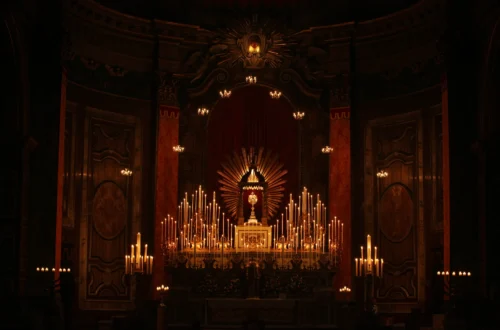
Our communion with Christ may also be deepened through Eucharistic adoration. Remaining quietly before the Blessed Sacrament allows us to contemplate the face of Christ in silence, opening our hearts to His presence and listening attentively to His voice. Many saints considered time spent before the tabernacle to be among the greatest privileges of the Christian life, finding there strength in temptation, peace amid suffering, wisdom in uncertainty, and consolation during periods of spiritual dryness.
Nevertheless, the highest participation in the Eucharistic mystery remains the worthy reception of Holy Communion during the Holy Sacrifice of the Mass. Careful preparation before Mass, attentive participation in the sacred liturgy, and heartfelt thanksgiving after receiving Holy Communion enable the faithful to cooperate more fully with the graces Christ desires to bestow. Every worthy Communion deepens our union with Christ, strengthens our communion with His Church, and prepares us for the everlasting banquet of Heaven.
The Holy Eucharist is rightly called the greatest mystery of the Christian faith because within this sacrament the whole mystery of salvation is contained. It is the living memorial of Christ’s Passion, the perpetual sacrifice of the New Covenant, the Bread of Angels, the medicine of immortality, the bond of ecclesial unity, and the pledge of eternal glory. It is both the source from which the Church receives her life and the summit toward which all her worship is directed.
Let us therefore cherish this incomparable gift by avoiding every occasion of sin, approaching the altar with humility and faith, making frequent use of the Sacrament of Reconciliation, and spending generous time in prayer before the Blessed Sacrament. May our hearts be transformed ever more perfectly into the likeness of Christ through frequent and worthy reception of His Body and Blood, until that blessed day when sacramental communion gives way to the Beatific Vision, and we behold God face to face in the eternal joy of His heavenly kingdom.
Discover more from Chavez Cyrillus Mariae Poon
Subscribe to get the latest posts sent to your email.