Happy Feast Day of St. Dominic! Today, I wish all my beloved friends who are Dominican Friars a very happy feast day. May St. Dominic’s prayers obtain for you abundant graces as you continue faithfully to preach the truth of the Gospel and serve Christ and His Church.
Here is a beautiful recording of In caelesti hierarchia, the Sequence appointed for his Mass in the Dominican Missal. Sung before the Gospel on the feast of the founder of the Order of Preachers, this ancient composition stands among the most treasured musical and literary expressions of Dominican devotion. Rich in biblical imagery and theological symbolism, it invites the faithful to contemplate the life, mission, and heavenly glory of the saint whose preaching helped renew the Church in the early thirteenth century.
St. Dominic was, of course, the first saint of his Order to be canonized. He was declared a saint in 1234 by Pope Gregory IX (1227–1241), barely thirteen years after his death. Gregory had known Dominic personally during his years as Cardinal Ugolino and later as pope, and he famously declared that he no more doubted Dominic’s sanctity than he did that of Saints Peter and Paul. Such an extraordinary statement reflects not only the pope’s profound personal admiration for Dominic but also the widespread recognition of his holiness among those who had encountered him. Dominic’s reputation for charity, humility, tireless preaching, and unwavering commitment to the truth had already spread throughout Christendom, making his canonization one of the earliest and most significant recognitions of sanctity in the medieval Church.
The author of In caelesti hierarchia remains unknown. Nevertheless, the Sequence is attested in Dominican liturgical sources that predate the codification of the Dominican Rite in the mid-1250s under the direction of Blessed Humbert of Romans. This places the work among the earliest surviving witnesses to the Order’s own liturgical tradition and demonstrates that devotion to St. Dominic was already being expressed in a distinctive and highly developed liturgical form within only a few decades of his death. Through the centuries, the Sequence remained an integral part of the Dominican Missal, accompanying the annual celebration of the founder’s feast and linking successive generations of friars to the spiritual heritage of the Order.
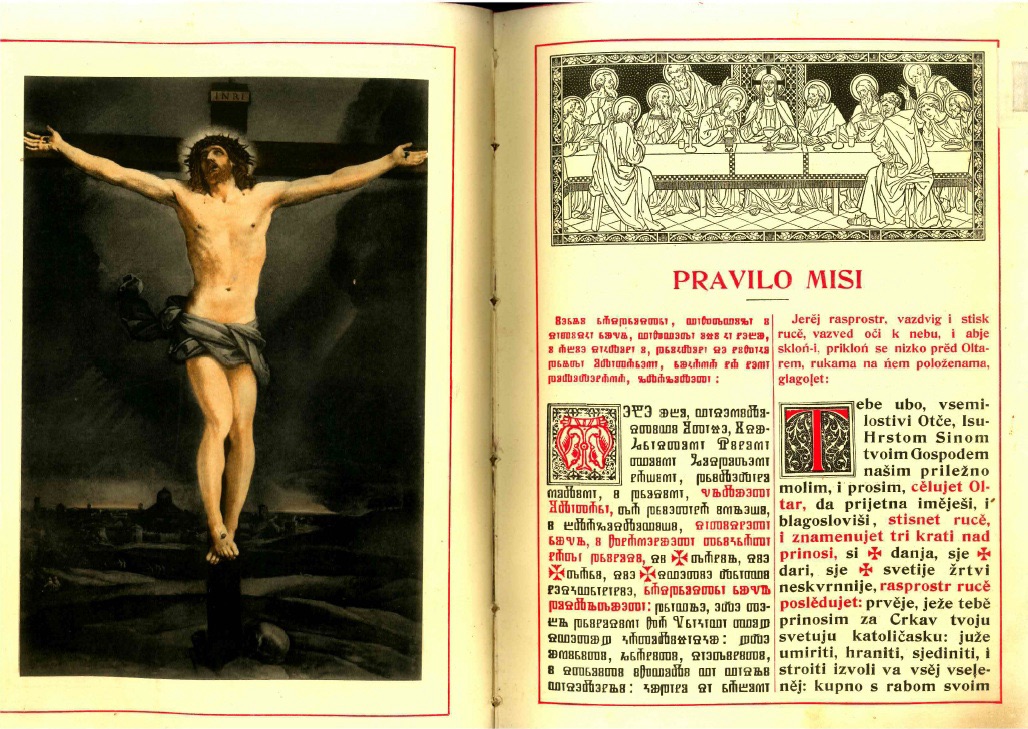
The Dominican Rite itself occupies a unique place within the liturgical history of the Latin Church. Rather than being created from nothing, it represented the careful harmonization of the diverse liturgical customs that had developed in the Order’s earliest provinces. Approved by the Holy See and celebrated for more than seven centuries, the rite preserved many ancient liturgical features while reflecting the particular spirituality and apostolic mission of the Order of Preachers. Within this rich tradition, the Sequence for St. Dominic’s feast served not merely as a poetic embellishment but as a theological meditation on the saint’s role in the divine plan of salvation.
The title In caelesti hierarchia immediately evokes the celestial order described by Pseudo-Dionysius the Areopagite, whose writings profoundly influenced medieval theology. By situating Dominic within the heavenly hierarchy, the Sequence presents him not simply as a historical figure but as one who now participates in the communion of saints, interceding before the throne of God while continuing to guide the Church through his spiritual sons and daughters. The text repeatedly contrasts the light of divine truth with the darkness of ignorance and error, portraying Dominic as a faithful herald of Christ whose preaching illumined minds and led countless souls toward salvation.
This emphasis on light and truth reflects the heart of Dominican spirituality. Founded in an age marked by doctrinal confusion and widespread heresy, the Order of Preachers was established to unite the contemplative life with the apostolic ministry of preaching. Dominic understood that authentic preaching must arise from deep prayer, study of Sacred Scripture, and a life conformed to Christ. The friars were therefore called not only to proclaim the Gospel but to embody it through poverty, humility, charity, and intellectual discipline. The Sequence beautifully captures this ideal, presenting Dominic as both contemplative and preacher, whose wisdom flowed from intimate union with God.
Over the centuries, In caelesti hierarchia has been admired not only for its theological depth but also for its remarkable poetic artistry. Its carefully constructed verses, vivid imagery, and elegant Latin demonstrate the flourishing of medieval sacred poetry at its finest. Like many liturgical sequences of the Middle Ages, it was intended not merely to instruct but to move the hearts of those who heard it. The chant’s flowing melody allows the text to unfold with solemn dignity, inviting meditation rather than haste and drawing the listener into the mystery being celebrated.
The Sequence also serves as an enduring testimony to the Church’s understanding of the communion of saints. It celebrates Dominic not as an isolated hero of the past but as a living member of Christ’s Mystical Body whose example continues to bear fruit. The countless Dominican saints, blesseds, scholars, missionaries, martyrs, and contemplatives who have followed in his footsteps stand as witnesses to the enduring vitality of his vocation. Through their preaching, teaching, prayer, and service, the charism entrusted to Dominic continues to enrich the life of the universal Church.
As we listen to this recording, we are invited to enter into the rich heritage of Dominican worship and to join our voices spiritually with generations of friars, nuns, sisters, and faithful who have celebrated the memory of their holy founder. Ancient chants such as In caelesti hierarchia are far more than historical curiosities; they remain living expressions of the Church’s prayer, preserving within their melodies the faith, devotion, and theological wisdom of centuries.
May this beautiful Sequence deepen our appreciation of St. Dominic’s extraordinary legacy and renew within us a love for the truth that he so faithfully proclaimed. Inspired by his example, may we seek Christ with greater fervour through prayer and study, bear witness to the Gospel with charity and courage, and remain steadfast in fidelity to the Church. Through the intercession of St. Dominic, may all who hear this ancient chant be drawn ever more fully into the light of Christ, the Eternal Truth whom he dedicated his life to preaching.
| Latin | English translation |
|---|---|
| In caelesti hierarchia, nova sonet harmonia, novo ducta cantico: Cui concordet in hac via, nostri chori melodia, congaudens Dominico. Ex Aegypto vastitatis, virum suae voluntatis vocat Auctor saeculi, In fiscella paupertatis, flumen transit vanitatis, pro salute populi. In figura catuli, praedicator saeculi matri praemonstratur; Portans ore faculam, ad amoris regulam populos hortatur. Hic est novus legislator, hic Elias aemulator, et detestans crimina. Vulpes dissipat Samsonis, et in tuba Gedeonis, hostis fugat agmina. A defunctis revocatum, matri vivum reddit natum, vivens adhuc corpore: Signo crucis imber cedit; turba fratrum panem edit, missum Dei munere. Felix, per quem gaudia tota jam ecclesia sumens exaltatur. Orbem replet semine, in caelorum agmine tandem collocatur. Jacet granum occultatum, sidus latet obumbratum: sed Plasmator omnium, Ossa Joseph pullulare, sidus jubet radiare, in salutem gentium. O quam probat carnis florem, omnem superans odorem, tumuli fragrantia! Aegri currunt, et curantur, caeci, claudi reparantur, virtutum frequentia. Laudes ergo Dominico personemus mirifico, voce plena: Clama petens suffragia, ejus sequens vestigia plebs egena. Sed tu pater pie, bone, pastor gregis, et patrone, prece semper sedula, Apud curiam summi Regis, derelicti vices gregis commenda per saeculi. Amen. Alleluia. | Now new canticles ascending, And new strains harmonious blending, ’Mid the hierarchies of heaven: With our earthly choirs according, Join this festival in lauding, To our holy father given. For the welfare of the nations, Called from Egypt’s desolations By their God and Maker, he Was the chosen one and glorious, Passing o’er the wave victorious, In the ark of poverty. Ere his birth, the preacher brother Is prefigured to his mother By a hound with torch of fire; So her son, his torch-light bearing, Midst the nations dark appearing, Leads them on with full desire. He, another Moses, teacheth, And Elias-like he preacheth, Sin denouncing with his might Samson-like his foxes sending, And the foe his trumpet rending, Gedeon-like he put to flight. From death’s sleep a child he waketh Whom alive his mother taketh: When the holy sign he makes, Cease the floods; and bread from heaven For his fainting sons is given Which into their hands he breaks. Happy he, whose elevation, Is our mother’s exa1tation, Is her joy and weal indeed. To his home by saints attended, Hath his soul for aye ascended, Having filled the earth with seed. Like the hidden grain he bideth Like the clouded star he hideth: But the Maker of the spheres, Joseph’s dry bones readorning, Will reveal the star of morning, Till earth’s darkness disappears. O surpassing fragrance, telling Of the virtues of that dwelling, Which within the tomb doth lie! Thither flock the sick for healing, Blind and lame the grace revealing That his body lives for aye. Wherefore now with jubilation Bless and praise him, every nation, Cry aloud, and crave his care: Sing Dominic the glorious, Sing Dominic victorious, Claim his help and promised prayer. And thou, father, kind and loving, Shepherd, patron, unreproving, Kneeling heaven’s high throne before, Lift for us thy voice prevailing, To our King with prayers availing Evermore and evermore. Amen. Alleluia. |
Discover more from Chavez Cyrillus Mariae Poon
Subscribe to get the latest posts sent to your email.