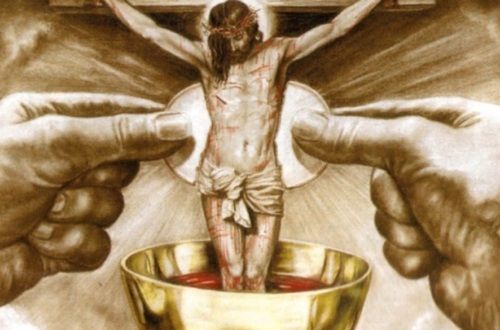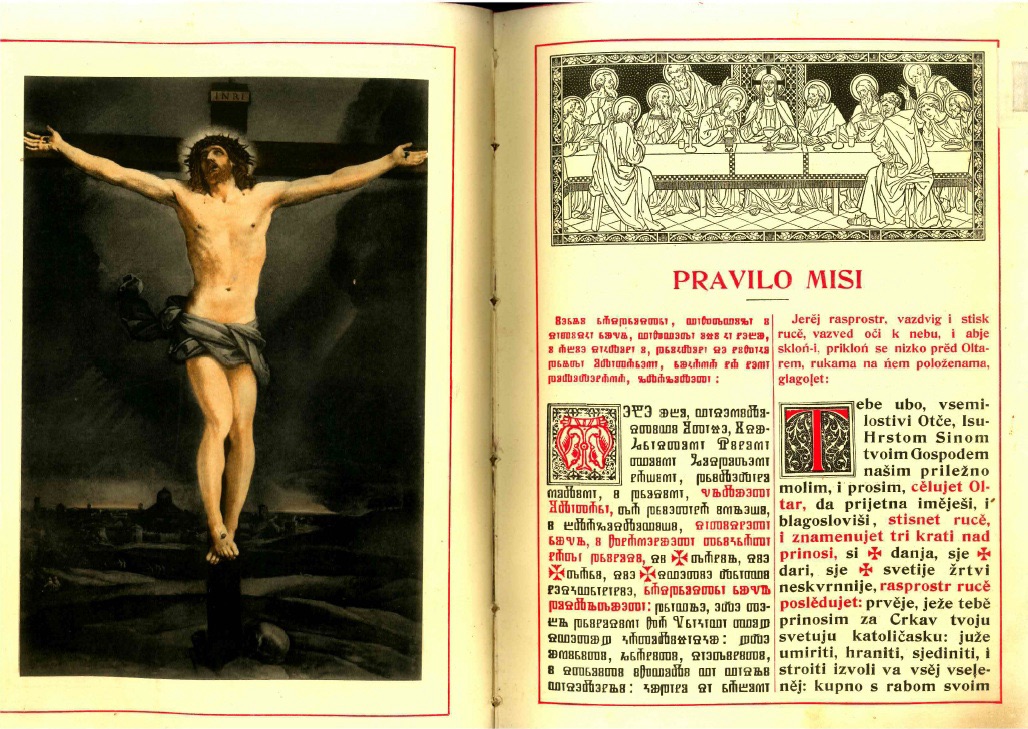
The Quarant’Ore (Italian translation: “The Forty Hours”) is a traditional Roman Catholic devotion in which the faithful gather for forty consecutive hours of Eucharistic adoration before the Blessed Sacrament. This period of uninterrupted prayer commemorates the approximately forty hours during which the body of Jesus Christ lay in the Holy Sepulchre between His Crucifixion and Passion on Good Friday and His Resurrection on Easter Sunday.
The devotion invites the faithful to spend time in silent prayer, contemplation, and reparation before Christ truly present in the Holy Eucharist. Throughout the forty hours, churches often organize continuous adoration, ensuring that the Blessed Sacrament is never left unattended. The practice is frequently accompanied by the celebration of Mass, the Liturgy of the Hours, the Rosary, and other devotional prayers.
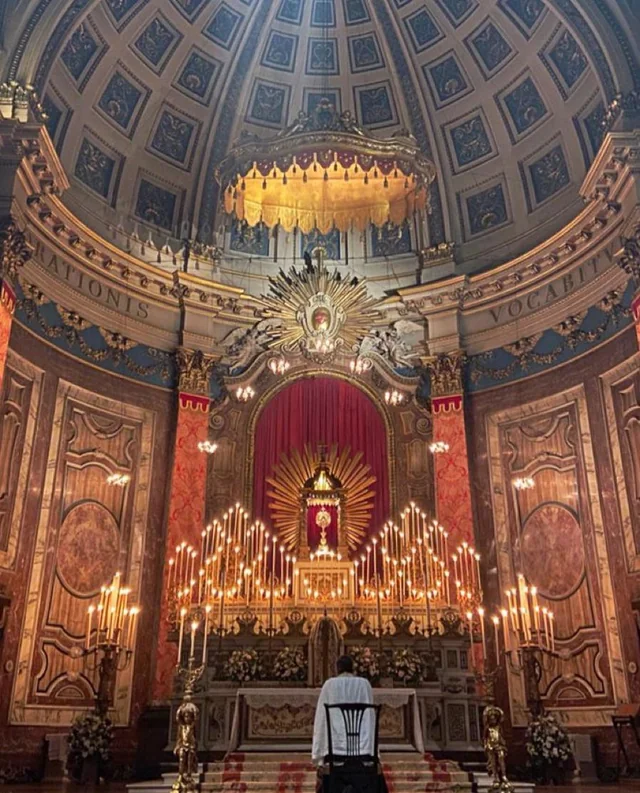
St. Philip Neri was especially devoted to the practice of the Quarant’Ore and played a significant role in promoting it throughout the city of Rome. Through his encouragement, the devotion became deeply rooted in the spiritual life of the Roman faithful, fostering greater reverence for the Blessed Sacrament and inspiring both personal conversion and communal prayer.
Although forms of the Forty Hours devotion had already existed in various parts of Italy, it received official papal approval during the pontificate of Pope Clement VIII. In his Apostolic Constitution Graves et Diuturnae, issued on 25th November 1592, Pope Clement VIII formally regulated and encouraged the observance of the Quarant’Ore throughout Rome. The Constitution established guidelines for the continuous exposition of the Blessed Sacrament and promoted an unbroken succession of Forty Hours devotions among the city’s churches, ensuring that perpetual Eucharistic adoration would continue from one church to another.
Over the centuries, the Quarant’Ore spread beyond Rome and became a cherished devotion throughout the Catholic Church. Today, many parishes continue to observe the Forty Hours devotion as a time of intense prayer, thanksgiving, reparation, and renewal, drawing the faithful into a deeper encounter with Christ in the Blessed Sacrament.
Although the Quarant’Ore was formally regulated in Rome under Pope Clement VIII, the tradition is generally traced to Milan in 1537, where it was promoted by Fr. Giuseppe da Fermo, a Capuchin friar. At the time, Milan was suffering greatly from the ravages of war, political unrest, and the spiritual desolation that accompanied these hardships. Amid such uncertainty, Fr. Giuseppe urged the people to lift their eyes from the miseries of the world and place their trust in God’s providence through prayer before the Blessed Sacrament.
Believing firmly in the power of communal prayer, Fr. Giuseppe called upon the faithful to undertake forty hours of continuous prayer and Eucharistic adoration. He assured them that if they united in prayer, imploring God’s mercy and protection, the Lord would deliver the city from the devastation of its enemies and restore peace to the land.
The people of Milan responded wholeheartedly to his appeal. Thus began the Forty Hours Devotion in the Cathedral of Milan during one of the most turbulent periods of Italian and European history. Soon, other churches throughout the city adopted the practice in rotation, ensuring that continuous prayer before the exposed Blessed Sacrament was maintained. This arrangement enabled the entire Christian community to participate, with individuals and families taking turns to spend an hour in silent adoration.
The devotion was accompanied by frequent opportunities for the Sacrament of Reconciliation, allowing the faithful to prepare themselves spiritually and approach the Holy Eucharist with renewed fervour and devotion. Before long, the prayers of the people appeared to bear fruit. Peace negotiations were initiated, and the Holy Roman Emperor Charles V and King Francis I of France met near the gates of Milan to conclude articles of peace. For the faithful, this reconciliation was seen as a sign of God’s gracious response to their united prayers, further strengthening devotion to the Forty Hours and encouraging its spread throughout Italy and, eventually, the wider Catholic Church.
To encourage the spread of this worthy devotion, Pope Clement VIII granted a Plenary Indulgence to the faithful who participated in the Forty Hours Devotion under the usual prescribed conditions. Those seeking to obtain the indulgence were required to make a sacramental confession and receive absolution, receive Holy Communion, and devoutly visit a church or chapel in which the Forty Hours Devotion was being observed.
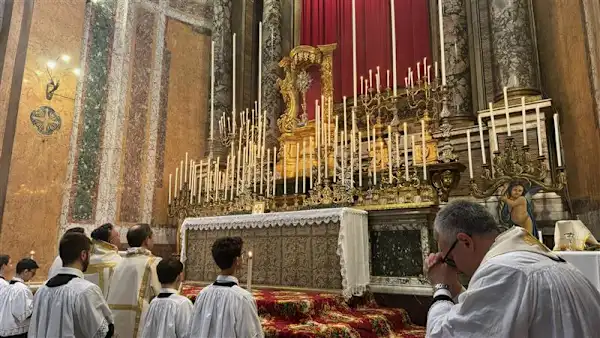
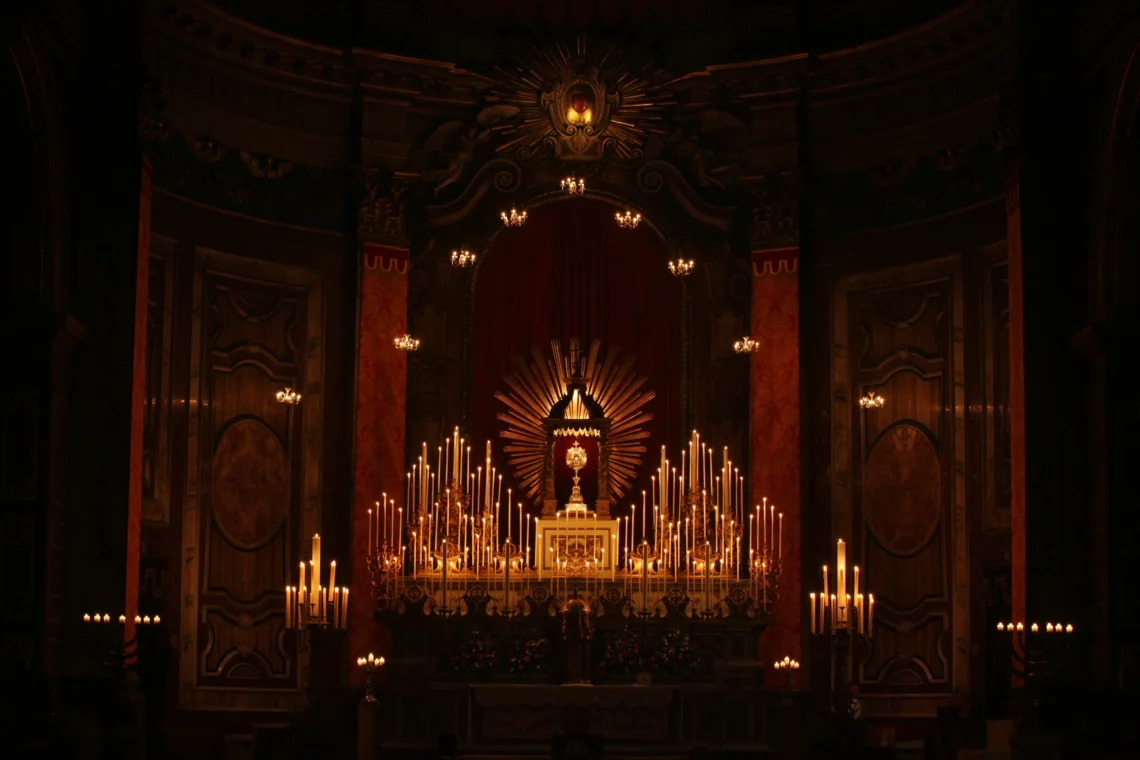
Quarant’Ore in Santissima Trinità dei Pellegrini, Rome
The regulations further stipulated that the faithful should visit the Blessed Sacrament at least once during the three days of solemn exposition. Holy Communion could be received either on the day preceding the exposition or on any one of the three days of the devotion. It was not necessary, however, to receive Holy Communion in the same church or chapel where the Blessed Sacrament was exposed, provided the other prescribed conditions were fulfilled.
The spiritual benefits attached to the devotion were later increased by Pope Paul V, who granted an indulgence of ten years and ten quarantines (quadragenae) for each devout visit made to the Blessed Sacrament during the Forty Hours. According to the Church’s traditional teaching and discipline regarding indulgences, these spiritual benefits could also be applied, by way of suffrage, to the faithful departed — the Poor Holy Souls in Purgatory — thereby assisting them through the prayers and merits of the Church.
These papal grants of indulgences greatly contributed to the spread of the Forty Hours Devotion throughout the Catholic world. By encouraging frequent confession, worthy reception of Holy Communion, and prolonged prayer before the Blessed Sacrament, the Popes sought to foster a deeper Eucharistic faith and inspire the faithful to seek both personal conversion and the spiritual renewal of society through adoration of Christ truly present in the Holy Eucharist.
The Forty Hours Devotion continues to be observed in many Catholic parishes throughout the world. Although it may be held at various times during the year, many parishes traditionally schedule it during the early weeks of Lent as a period of prayer, repentance, and spiritual renewal in preparation for Easter.
The devotion ordinarily begins on a Sunday with the Solemn Exposition of the Blessed Sacrament and concludes on the following Tuesday, after forty continuous hours of Eucharistic adoration. Throughout this entire period, the Blessed Sacrament remains exposed upon the altar, and the faithful are invited to spend time in silent prayer before Our Lord in the Holy Eucharist.
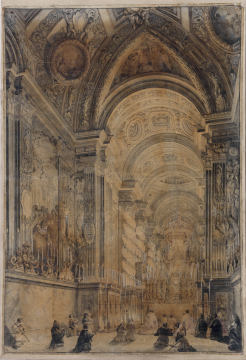
Participants typically commit themselves to a designated hour of adoration, either individually or together with their families. To ensure that the Blessed Sacrament is never left unattended, each hour must be covered by at least one adorer, although many parishes encourage several adorers to be present at all times. A minimum of forty volunteers is therefore generally required to maintain the uninterrupted vigil throughout the forty-hour period.
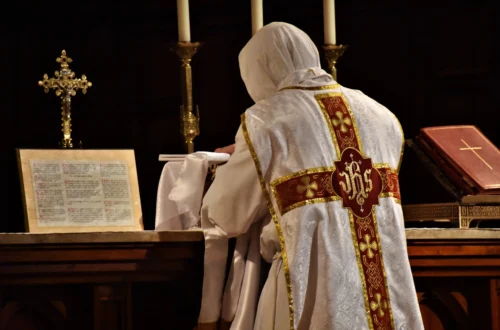
The liturgical arrangements are carried out with great solemnity. Gold or white vestments are customarily worn by the clergy, additional candles are prepared to replace those that burn down during the exposition, and the sanctuary is adorned in a manner befitting the dignity of the Blessed Sacrament. Public prayers often include the Litany of the Saints, the prescribed collects, and other traditional devotions. Depending on local custom, these may be supplemented by the Litany of the Holy Name of the Blessed Virgin Mary, the Miserere (Psalm 50/51), the Te Deum, the Rosary, and periods of silent meditation.
The accompanying images were taken during the annual Forty Hours Devotion at the FSSP Parish of Santissima Trinità dei Pellegrini in Rome and the Oratory of St. Philip Neri in Brompton, London. Today, it is among the few local parishes in Rome’s historic centre (centro storico) to have faithfully preserved this venerable tradition, which declined in many places during the period of widespread liturgical and pastoral change that followed the cultural upheavals of the 1960s. Nevertheless, where the Forty Hours Devotion has been restored, many pastors and faithful have testified to its fruits in fostering Eucharistic devotion, encouraging more frequent reception of the sacraments, inspiring priestly and religious vocations, and contributing to the spiritual renewal of parish life.
Discover more from Chavez Cyrillus Mariae Poon
Subscribe to get the latest posts sent to your email.