Work your way to heaven
Vocation to Holiness
In the Old Testament, God commanded His chosen people:
“You shall be holy to me; for I the Lord am holy, and have separated you from the peoples, that you should be mine.” (Leviticus 20:26)
In the New Testament, our Lord Jesus Christ confirms this call, this vocation; he repeats the invitation that is meant for everyone.
“You, therefore, must be perfect, as your heavenly Father is perfect. ” (Matthew 5:48)
St. Paul, in his letter to the Ephesians, exclaims:
“Blessed be the God and Father of our Lord Jesus Christ, who has blessed us in Christ with every spiritual blessing in the heavenly places, even as he chose us in him before the foundation of the world, that we should be holy and blameless before him.” (Ephesians 1:3-4)
Even before God created the universe, before He made Adam and Eve, you and I were already in His mind, you and I were already in His all-wise and all-loving plan. Each one of us is special to God.
This is what Pope Benedict XVI declared during his inauguration as Bishop of Rome on the 24th of April 2005:
“We are not some casual and meaning-less product of evolution. Each of us is the result of a thought of God. Each of us is willed, each of us is loved, each of us is necessary.”
The fact that you and I exist did not happen by accident. It was no coincidence that our parents fell in love. We are not the result of chance or coincidence. Each of us is willed, each of us is loved, each of us is necessary.
Not that we deserve it. This is why we pray to God with the psalms:
“What is man that thou art mindful of him, and the son of man that thou dost care for him? Yet thou hast made him little less than God, and dost crown him with glory and honor.” (Psalm 8:4-5)
Psalm 144 repeats this idea:
“O Lord, what is man that thou dost regard him, or the son of man that thou dost think of him? Man is like a breath, his days are like a passing shadow.” (Psalm 144:3-4)
And the reason for God's decision to create us is so that we can experience His unlimited and unending happiness. For that is what holiness is. It is happiness without bounds, happiness that just goes on and on and on. Obviously, it is not the happiness we experience on earth, for everything here has a limit and is only temporary.
This is why God designed our hearts so that it will keep on look-ing for perfect and unending happiness, and it will not stop until it ac-quires it. But perfect and unending happiness is something that the earth cannot provide. Everything here is temporary, everything perish-es at some time. Only God is forever. This is why finding happiness is the same as being holy.
This is why St. Augustine prayed, “Lord, You have made our hearts for You and our hearts are restless until they rest in You!” This is why Pope St. John Paul II said that holiness is the “high standard of ordinary Christian living” (John Paul II, Novo Millennio Ineunte, 31).
He was echoing what the Second Vatican Council taught: that “all the faith-ful, whatever their condition or state, are called by the Lord, each in his own way, to that perfect holiness whereby the Father Himself is perfect.” (Lumen Gentium, 12) An entire chapter (chapter 5) of Lumen Gentium, the main document of the Council, dedicated itself to stress this fact.
But even before the Second Vatican Council, St Josemaría Escrivá had already felt God's call to spread this message since 1928. He wrote in his first book, The Way: “Your duty is to sanctify yourself. Yes, even you. Who thinks that this task is only for priests and religious? To everyone, without exception, our Lord said: 'Be ye perfect, as my heav-enly Father is perfect.' (no 291)
What a great gift our Lord has given us! This is why the Scripture prays:
“I will give thanks to thee, O Lord, among the peoples; I will sing praises to thee among the nations. For thy steadfast love is great to the heavens, thy faithfulness to the clouds. Be exalted, O God, above the heavens! Let thy glory be over all the earth! ” (Psalm 57:9-11)
Each in his own way
We have seen how the Church has confirmed this doctrine. Note that it says that everyone is called “each in his own way”. There are many ways to heaven. Priests and religious have their own specific way of being holy. How about ordinary people?
Until recently many thought that to become holy, one had to somehow get involved in an official church activity, or a ministry. The Church certainly needs competent people who can help out in a parish, or in the diocese. But not all will have the talent, or the time to do so. Besides, there will not be enough chores to go around. Imagine if a par-ish has 6,000 parishioners. How many of the parishioners can be read-ers in church, or catechists, or extraordinary ministers of the Eucharist? Only a handful. In the meantime, what are the others to do?
The idea that one can be holy only by doing some kind of official job in the parish partly stems from the belief that worldly concerns, like working for a living or raising a family cannot be considered sacred, pre-cisely because they are things of this world.
But, wait a minute. Jesus Christ actually spent thirty years of His life as an ordinary working man. If being a carpenter was indeed too worldly to be sanctified, why did He not throw away his tools and start preaching right away? In fact, he had already caused a sensation in the temple when He was twelve! Why did He not begin then? Why did He prefer to wait so many years before beginning His public ministry? Isn't there a message for us here, ordinary Christians?
St. Josemaría explained in one of his homilies, “I have taught this constantly using words from holy Scripture. The world is not evil, because it has come from God's hands, because it is His creation, be-cause 'Yahweh looked upon it and saw that it was good' (cf Gen 1:7 ff). We ourselves, mankind, make it evil and ugly with our sins and infideli-ties. Have no doubt: any kind of evasion of the honest realities of daily life is for you, men and women of the world, something opposed to the will of God.
“On the contrary, you must understand now, more clearly, that God is calling you to serve Him in and from the ordinary, mate-rial and secular activities of human life. He waits for us every day, in the laboratory, in the operating theatre, in the army barracks, in the university chair, in the factory, in the workshop, in the fields, in the home and in all the immense panorama of work. Understand this well: there is something holy, something divine, hidden in the most ordinary situations, and it is up to each one of you to dis-cover it.” (Homily “Passionately Loving the World”)
It is up to each one of us, “each in his own way,” to discover that “divine something,” that opportunity to make ourselves “perfect as the heavenly Father is perfect,” to earn a piece of heaven for ourselves and for those whom we love.
How worldly things can be mede holy?
The formula that St. Josemaría proposed was rather simple, and can be adapted to different circumstances. It didn't matter whether one was a farmer or a bank CEO, a fisherman or a doctor, a housewife or a businessman. Every honest job could be used to purchase the heavenly home. Every respectable work could be turned into a stepping stone to holiness.
Becoming holy requires three basic things:
- State of grace
- Offering to God whatever one is doing, doing it for His glory
- Doing work as perfectly as possible
1. State of grace
Sanctifying grace is provided and augmented through prayer and the Sacraments, especially those that we can receive frequently: the Sacrament of Confession and the Sacrament of the Holy Eucharist. St. Josemaría proposed a plan of spiritual life which ordinary working peo-ple can easily implement.
2. By offering to God one's activities
That includes sleeping, eating, drinking – one turns it into prayer. By offering these to Him, we purify our intention, we kill all self-seeking, we eliminate all desire to be appreciated or thanked or praised.
St. Paul teaches us:
“So, whether you eat or drink, or whatever you do, do all to the glory of God.” (I Corinthians 10:31) Saint Paul says adds in another place, “And whatever you do, in word or deed, do everything in the name of the Lord Jesus, giving thanks to God the Father through him.” (Colossians 3:17)
3. Doing work as perfectly as possible
It means that one should always aim for excellence in every task that he performs. This is not for the sake of getting a raise or a promotion (though one might eventually get it). The reason is that if whatever we do should be done for God's glory, that it be offered to Him, then it has to be as perfect as one's capabilities and condition allow. There is also a biblical basis for this. The book of Leviticus records at least 30 times that God instructs the Israelites that their offering, their sacrifice has to be “without blemish”–it had to be perfect.
The lesson for all of us is that we should not wait for any special moments, or any special occasions to strive for personal holiness. Nei-ther should we look for holiness in some vague future time, or some past moment. The time for holiness is every single moment of every ordinary day, the time for holiness is now.
“O that today you would hearken to his voice!” (Psalm 95:7)
This is why, in the two most important vocal prayers, we ask for God's grace today, now: “Give us this day our daily bread.” “Pray for us sinners now and at the hour of our death.”
Conclusion
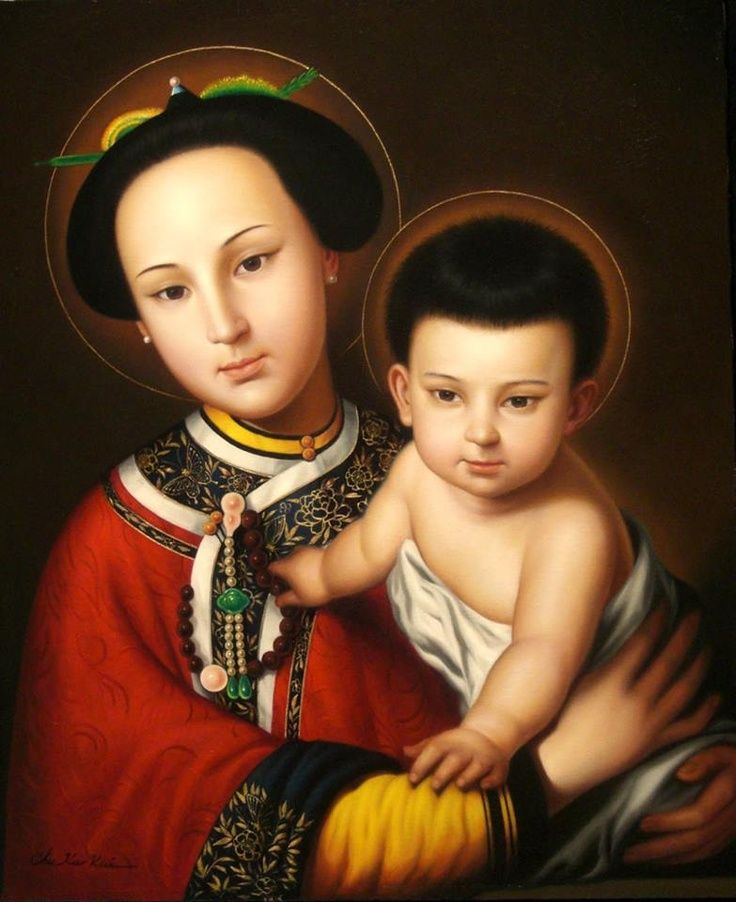
Let us ask St. Joseph and the Blessed Virgin Mary, foremost ex-emplars of holiness in ordinary life, to teach us and to intercede for us.
O Blessed Joseph, after Mary you are the greatest among the saints. But just like our Lady, you are a saint not because you performed the most amazing miracles in Nazareth. No, it was simply because you carried out – as well as you could, to the best of your ability – your role as carpenter, and husband, and father. Teach me to sanctify my daily du-ties, whatever they may be. Teach me to appreciate the greatness of ordinary life.
My most blessed Mother, you are the Queen of all saints. But you did not do even one single miracle in your entire lifetime. However, you did every single house chore with love. You took care of every single detail. You and Saint Joseph made sure that every little thing was done well, because both of you did it all for love, you did it all for Jesus Christ your Son, who with the Father and the Holy Spirit is one Lord and God, forever and ever. Amen.


